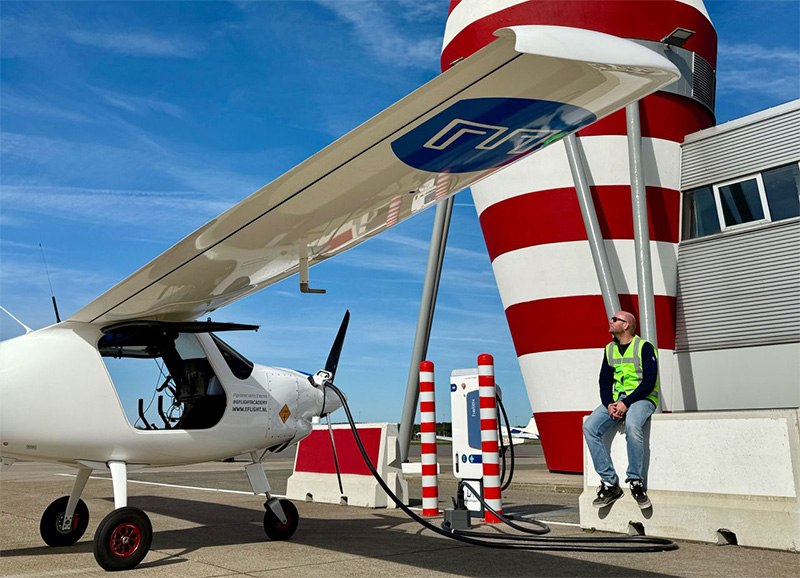
Future-ready airport
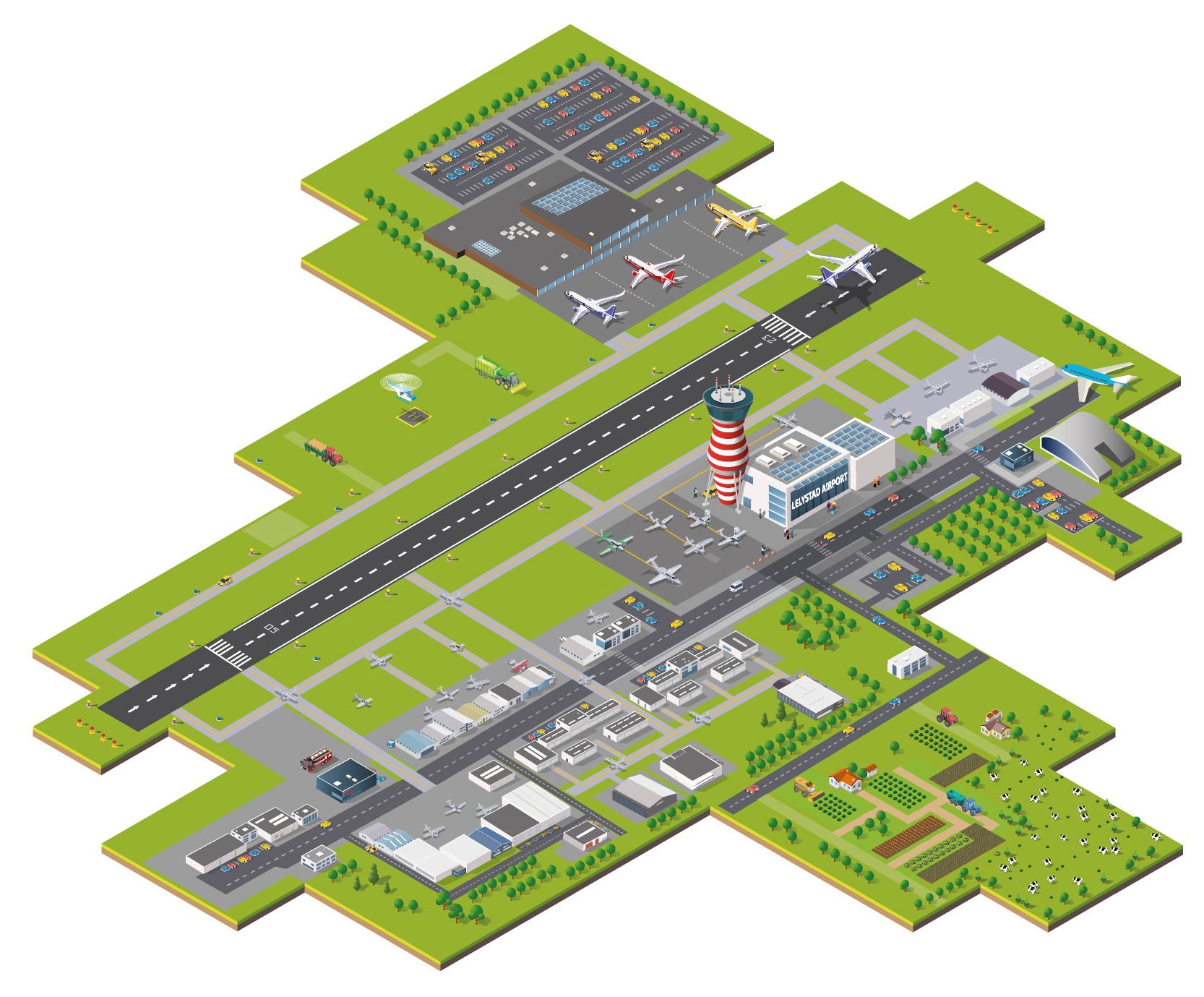
Lelystad Airport aims to become the most sustainable and innovative airport in the Netherlands. Together with our partners, we are working on new technologies and solutions that contribute to cleaner aviation and a future-proof region.
Quick links to:
 ClimateResilient
We are building and developing Lelystad Airport in a more climate-resilient way by phasing out natural gas use at the General Aviation area. The passenger terminal was already delivered as a gas-free building during construction. We encourage the reuse of materials and incorporate climate adaptation measures into our design processes.
Read more >
Energy & Energy Carriers
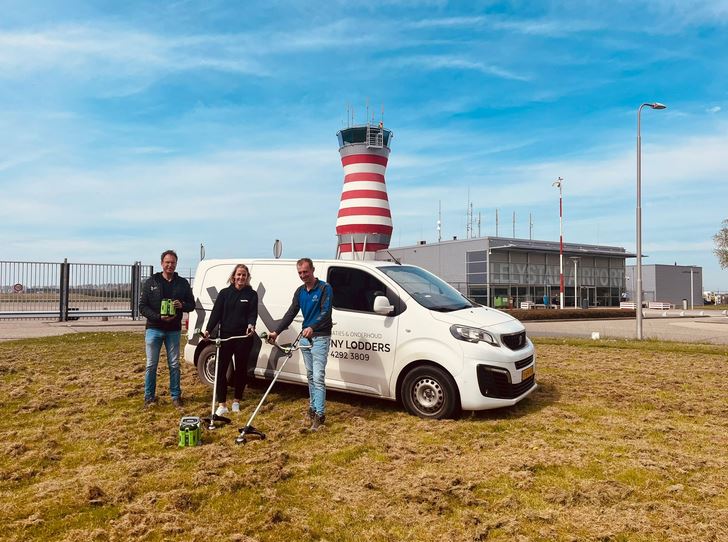
Lelystad Airport aims to fully transition all processes, vehicles and buildings at the airport to more sustainable energy sources and energy carriers.
 Aviation & Mobility
Our ambition focuses on accelerating the sustainability of mobility, both on the ground and in the air. We aim to achieve this by pioneering electric aviation, replacing ground fleets with electric or hydrogen-powered alternatives, and offering lower-emission aviation fuel solutions.
 Regional Development
Lelystad Airport aims to strengthen the region by creating a network in which living, working and learning come together and reinforce each other.
Energy & Energy Carriers
Sustainable Energy and Infrastructure
Lelystad Airport aims to fully transition all processes, vehicles and buildings at the airport to more sustainable energy sources and energy carriers.
Emergency Power
Lelystad Airport aims to supply the airport’s energy consumption with more sustainable energy sources, including its emergency power facilities.
2030
Lelystad Airport has at least one emergency power generator that is compatible with and powered by HVO100 biodiesel or hydrogen, or has a battery energy storage system with equivalent capacity.
2040
All emergency power generators at Lelystad Airport are supplied with HVO100 biodiesel or sustainably produced hydrogen, or have been replaced by battery energy storage systems.
2050
All emergency power generators are supplied with sustainable hydrogen or have been replaced by battery energy storage systems.
Sustainable Aviation Fuels (SAF)
Lelystad Airport aims to phase out all conventional fuels by 2050, including fuels used for aircraft operations.
2030
Lelystad Airport has replaced 100LL avgas and UL94 avgas with UL100 avgas.
Lelystad Airport complies with the national blending mandate requiring 14% Sustainable Aviation Fuel (SAF) for commercial flights.
2040
Lelystad Airport complies with the national blending mandate requiring 49% Sustainable Aviation Fuel (SAF) for commercial flights.
2050
Lelystad Airport complies with the national blending mandate requiring 100% Sustainable Aviation Fuel (SAF) for commercial flights.
No conventional forms of avgas are available anywhere across the airport site.
Airside Charging Infrastructure
Lelystad Airport is committed to making both aviation and ground-based operations more sustainable. To support the transition towards electric aircraft, Lelystad Airport will facilitate the required charging infrastructure.
2030
Lelystad Airport has at least four aircraft charging points available at the airport.
2040
Lelystad Airport has increased the number of aircraft charging points to eight.
2050
Lelystad Airport has charging points available at all aircraft stands and public aprons.
Landside Charging Infrastructure
Lelystad Airport is committed to making both aviation and ground-based activities more sustainable. Visitors can reach the airport through, among other options, electrified public transport in Flevoland. Many visitors also travel by private vehicle. It is therefore our responsibility to provide sufficient charging infrastructure at the airport, enabling visitors to easily charge their electric vehicles.
2030
Public parking areas at the airport site are equipped with at least two charging points.
2040
All parking facilities at the airport site have charging points available for at least 30% of the daily number of electric vehicles.
2050
All parking facilities at the airport site have charging points available for at least 50% of the daily number of electric vehicles.
Climate-resilient
Climate-Resilient and Sustainable Airport Development
We are building and developing Lelystad Airport in a more climate-resilient way by phasing out natural gas use at the General Aviation area. The passenger terminal was already delivered as a gas-free building during construction. We encourage the reuse of materials and incorporate climate adaptation measures into our design processes.
Building Documentation
Lelystad Airport aims to make its buildings easy to renovate, maintain and adapt for flexible use. The more detailed information available about a building, the easier it becomes to implement necessary changes in the future.
2030
All new construction projects and major renovations at Lelystad Airport from 2026 onwards include a material passport. The passenger terminal has had a material passport since completion and is LEED Gold certified.
2040
All buildings at Lelystad Airport have a material passport.
2050
All buildings across the Lelystad Airport site have a material passport.
Circular Construction
Lelystad Airport aims to reuse materials wherever possible to prevent waste and unnecessary consumption. Significant opportunities exist in the reuse of construction materials during building projects.
2030
All major renovations and new construction projects at Lelystad Airport from 2026 onwards achieve the highest possible BCI score.
2040
All renovations and new construction projects at Lelystad Airport achieve a minimum BCI score of 70%.
2050
All renovations and new construction projects at Lelystad Airport achieve a minimum BCI score of 80%.
Plastic Reduction
Lelystad Airport aims to use biodegradable products wherever possible.
2030
Lelystad Airport and its operational partners exclusively use recyclable plastics.
2040
Lelystad Airport has reduced annual plastic waste by 50% compared to 2030.
2050
Lelystad Airport has reduced annual plastic waste by 90% compared to 2030.
Procurement Strategy
Lelystad Airport aims to minimise the use of materials. This can be achieved by critically assessing procurement opportunities and avoiding unnecessary materials wherever possible.
2030
Lelystad Airport has a procurement strategy in which sustainability criteria are mandatory for new construction, renovation, refurbishment, purchasing and procurement processes.
2040
Lelystad Airport has made its procurement strategy binding for Royal Schiphol Group (RSG) and ground handling companies for processes within their operations at Lelystad Airport.
Heating Strategy
Lelystad Airport aims to remove all forms of gas-based heating from the airport site. This will be achieved by first making our own existing buildings more sustainable and sharing experiences and knowledge with our users.
2030
All buildings owned by Lelystad Airport are heated without the use of (bio)gas.
Solar Energy
Lelystad Airport aims to adapt to climate change. Solar energy has become increasingly attractive in recent years and can help reduce the airport’s reliance on the national energy grid.
2030
All renovations and new construction projects owned by Lelystad Airport from 2026 onwards have roof structures strong enough to support photovoltaic (PV) panels. Lelystad Airport has completed an assessment of the required and available potential for PV panels on each owned building.
2040
Parking facilities within the southern area of the airport site have roof structures suitable for PV panels covering 30% of their surface area. At least 50% of the energy consumption of each building owned by Lelystad Airport is generated by PV panels located on the airport site.
2050
All parking facilities within the southern area of the airport site have roof structures suitable for PV panels covering 50% of their surface area. The full energy consumption of every building owned by Lelystad Airport is generated by PV panels located on the airport site.
Aviation & Mobility
Our ambition focuses on accelerating the sustainability of mobility, both on the ground and in the air. We aim to achieve this by pioneering electric aviation, replacing ground fleets with electric or hydrogen-powered alternatives, and offering lower-emission aviation fuel solutions.
Aircraft Handling
Lelystad Airport aims to achieve zero emissions during aircraft handling operations. This will reduce emissions and limit exposure to harmful substances.
2030
All airside vehicles used for aircraft handling (Ground Support Equipment – GSE) with their own propulsion are powered by electricity, sustainable hydrogen or HVO100 biodiesel.
All aircraft are supplied with a Ground Power Unit (GPU) that provides energy without the use of fossil fuels.
2040
All airside vehicles used for aircraft handling (Ground Support Equipment – GSE) with their own propulsion are powered by electricity or sustainable hydrogen where technology allows.
At least 50% of aircraft stands at Lelystad Airport are equipped with pre-conditioned air units.
Auxiliary Power Unit (APU) Usage
Lelystad Airport aims to reduce the use of Auxiliary Power Units (APUs) to minimise emissions from aircraft while on the ground.
2030
Commercial flights minimise the use of APUs while on the ground.
2040
At least 50% of flights at Lelystad Airport no longer use APUs while parked at aircraft stands.
2050
All flights at Lelystad Airport no longer use APUs while parked at aircraft stands.
Airport Fleet
Lelystad Airport has already significantly reduced emissions by replacing vehicles with electric alternatives or switching vehicles to HVO100 biodiesel. The ultimate goal is for the entire airport fleet to operate with zero emissions.
2030
All Lelystad Airport vehicles are fully electric, while heavy-duty vehicles are powered by hydrogen or HVO100 biodiesel.
2040
All Lelystad Airport vehicles operate on electricity or sustainable hydrogen where technology allows.
Partner Fleets
In addition to our own vehicles, various external partners operate vehicles at the airport, for example for maintenance, inspections and safety operations. Lelystad Airport aims for these vehicles to operate with zero emissions as well.
2030
Lelystad Airport partners operating airside use electric vehicles, sustainable hydrogen-powered vehicles or vehicles running on HVO100 biodiesel.
2040
All airside vehicles operate on electricity or sustainable hydrogen where technology allows.
2050
All airside vehicles operate on electricity or sustainable hydrogen.
Regional Development
Lelystad Airport aims to strengthen the region by creating a network in which living, working and learning come together and reinforce each other.
Employment in the Local Area
Lelystad Airport aims to contribute to employment opportunities in Flevoland.
2030
At least 33% of Lelystad Airport employees live within a 30-minute driving distance or within a 35 km radius of the airport.
2040
At least 50% of Lelystad Airport employees live within a 30-minute driving distance or within a 35 km radius of the airport.
2050
At least 60% of Lelystad Airport employees live within a 30-minute driving distance or within a 35 km radius of the airport.
Local Procurement and Production
To enable more people in Flevoland to work locally, Lelystad Airport will increasingly source work from the regional market, creating employment opportunities across different sectors.
2030
The hospitality facilities in the passenger terminal source at least 30% of their required ingredients from the region.
Lelystad Airport sources products and services from within the province or within a 35 km radius wherever possible.
2040
The hospitality facilities in the passenger terminal source at least 50% of their required ingredients from the region.
Companies contracted by Lelystad Airport source products and services from within the province or within a 35 km radius wherever possible.
2050
The hospitality facilities in the passenger terminal source at least 70% of their required ingredients from the region.
All companies located at Lelystad Airport source products and services from within the province or within a 35 km radius wherever possible.
Ground Lease Agreements
The ground lease structure means that the airport does not have the same direct influence over buildings as a landlord would have. To encourage sustainable development of buildings, Lelystad Airport will support its users in making their facilities more sustainable.
2030
From 2026 onwards, Lelystad Airport only issues or extends ground lease agreements for buildings without gas connections.
2040
Lelystad Airport only issues ground lease agreements for designs where the roof structure is strong enough to support photovoltaic (PV) panels.
2050
Lelystad Airport only issues or extends ground lease agreements when at least 50% of the energy consumption on site is generated through PV panels.